


 Comment

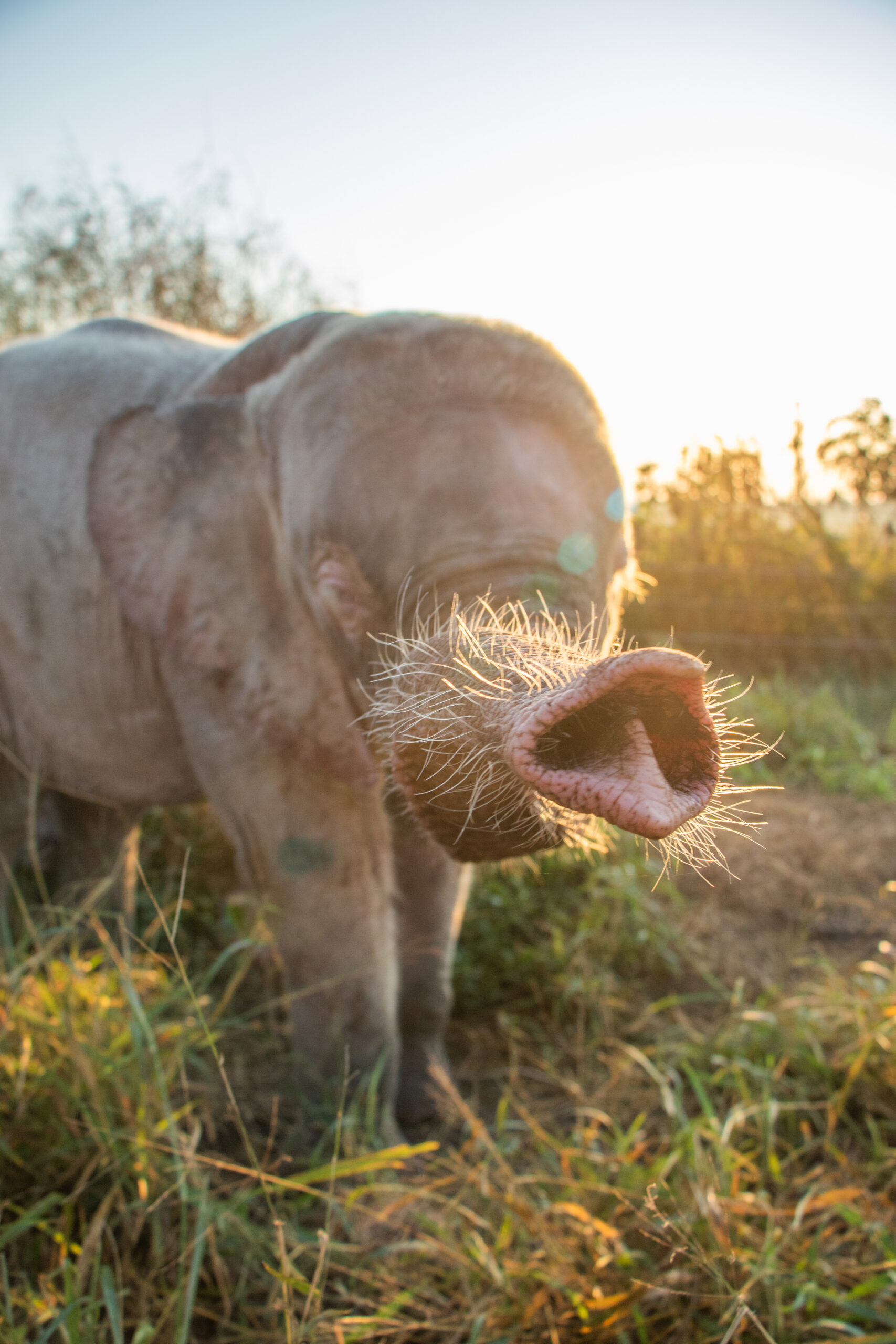
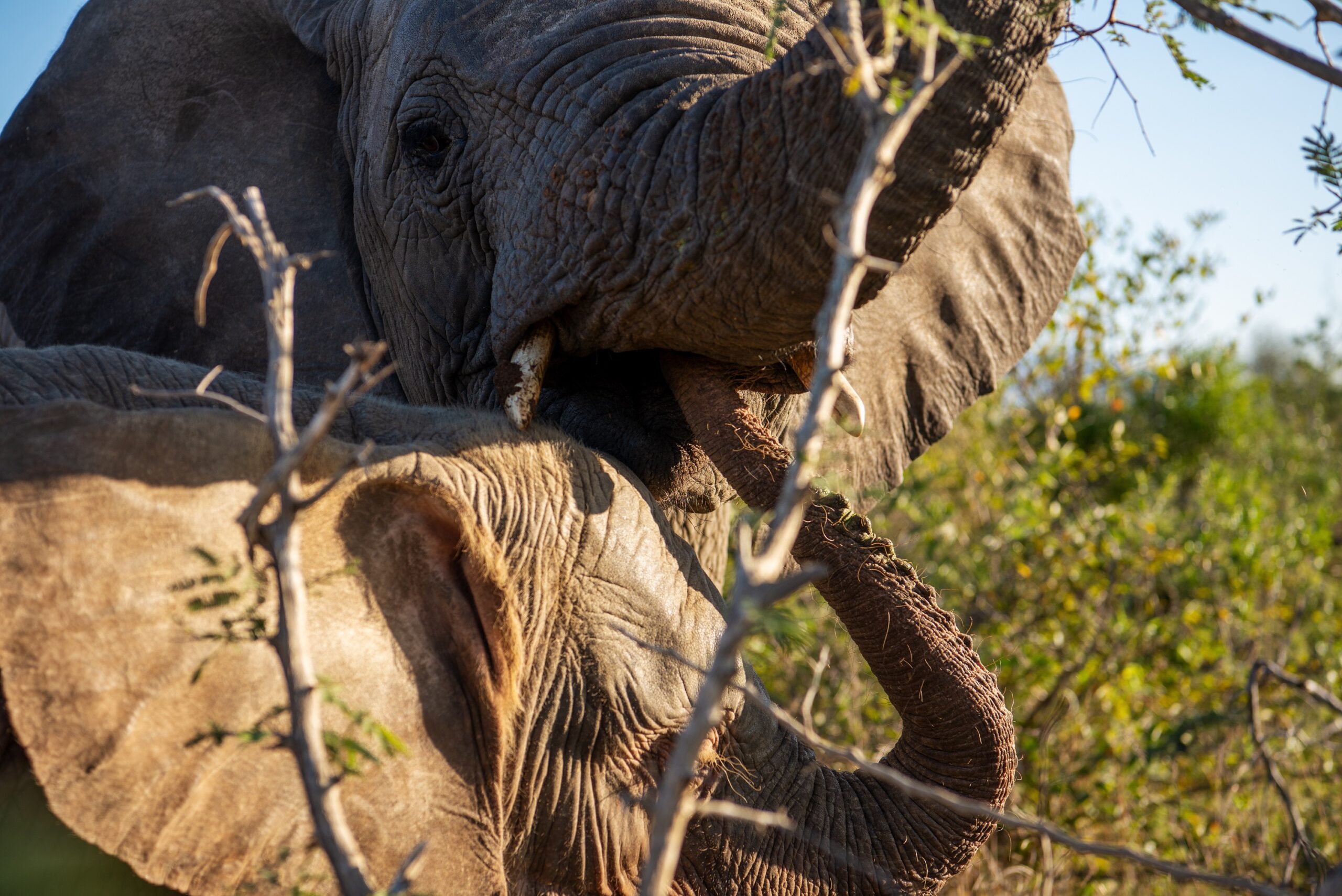
The ways in which elephants communicate are vast and complex. We have only recently started to understand some aspects of elephant communication, and there is still much we don’t know about this topic. One way in which elephants communicate is through touch – this is called tactile communication. If you’ve ever spent some time looking at elephants – whether in person or in videos – it’s likely that you’ve seen an elephant using their trunk to reach for the mouth of another elephant, or place their trunk near or into the mouth of another elephant. This behaviour is a form of tactile communication.
There are many different contexts in which elephants place their trunks near or into the mouths of other elephants, and many different reasons why they do so. We look into some of these contexts and reasons below.
We have been inspired by the great work of Elephant Voices and used their work, the elephants in our care, and the experts we work with as resources for this information.
Note: Hereafter we will refer to this behaviour as ‘placing the trunk in the mouth of another’, but elephants may only place their trunks near the mouths of others, or they may only reach for the mouths of others with their trunks.
Greeting and Bonding
Elephants place their trunks in the mouths of others during bonding ceremonies. Elephant bonding ceremonies occur for a variety of reasons – during greetings, births, etc. – and involve numerous behaviours. In addition to placing their trunks in each other’s mouths, elephants may back toward each other, flap their ears, trumpet, etc. It is believed that bonding ceremonies help to reinforce bonds between elephants.
This behaviour is not limited to greeting ceremonies. Elephants place their trunks in each other’s mouths during all types of greetings, even when the greeting takes place between only two elephants.
Reassuring and Comforting
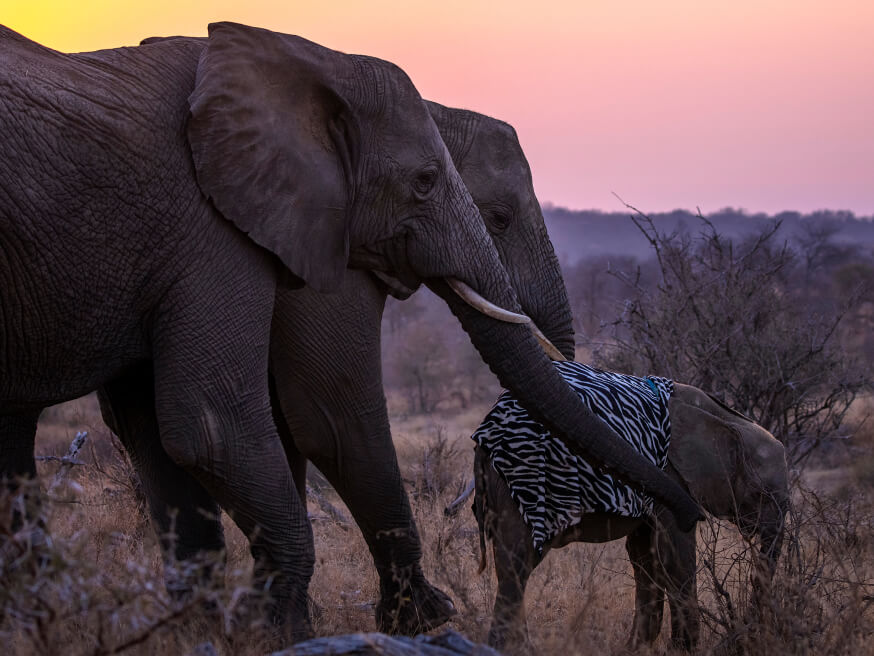
One reason why elephants place their trunks in others’ mouths is to offer reassurance or comfort. When elephants encounter a threat, they may bunch together and place their trunks in each other’s mouths to reassure each other. Elephant cows may also place their trunks in a calf’s mouth to reassure or comfort the calf.
You have likely seen Khanyisa’s allomothers placing their trunks in Khanyisa’s mouth, especially in situations where she seemed scared or unsure. In this way, they try to offer her comfort or reassurance. This behaviour is not limited to calves – you may also have seen older elephants reassuring each other. For example, Tokwe sometimes places her trunk in Bubi’s mouth to reassure her in stressful situations, as Bubi can become quite nervous.
Asking For, Taking, and Sampling Food
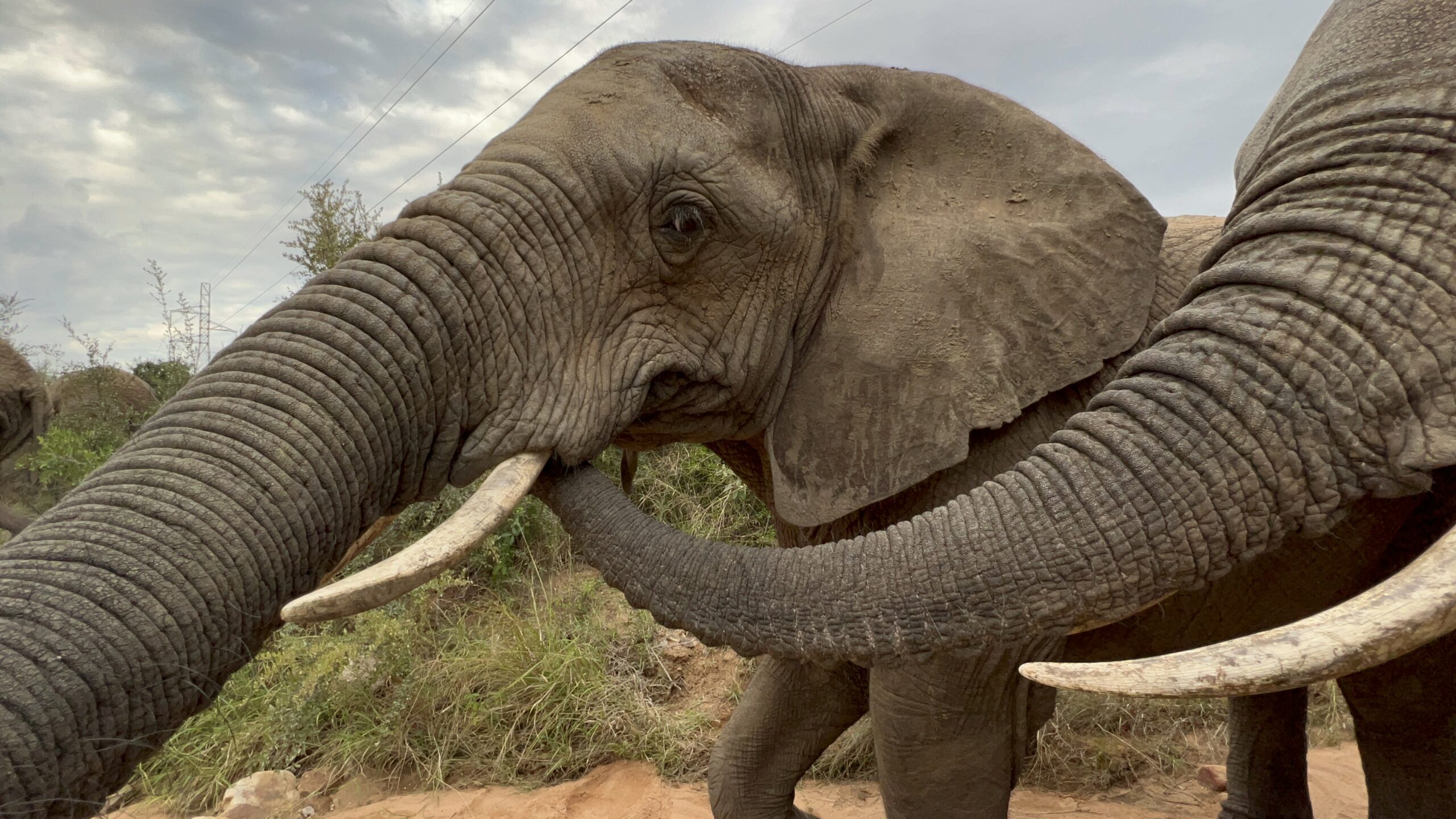
When asking for food, elephant calves may reach into the mouths of other elephants. This is accompanied by other behaviours such as following other elephants. Calves may also attempt to steal food from the mouths of others, and they may sample some of the food in another elephant’s mouth in order to find out what they are eating. This may help calves to learn what food is safe to eat.
You may have seen Khanyisa using her trunk to reach into the mouths of other elephants while they’re eating, whether to find out what they’re eating or in an attempt to steal some of their food.
Reconciliating and Mediating
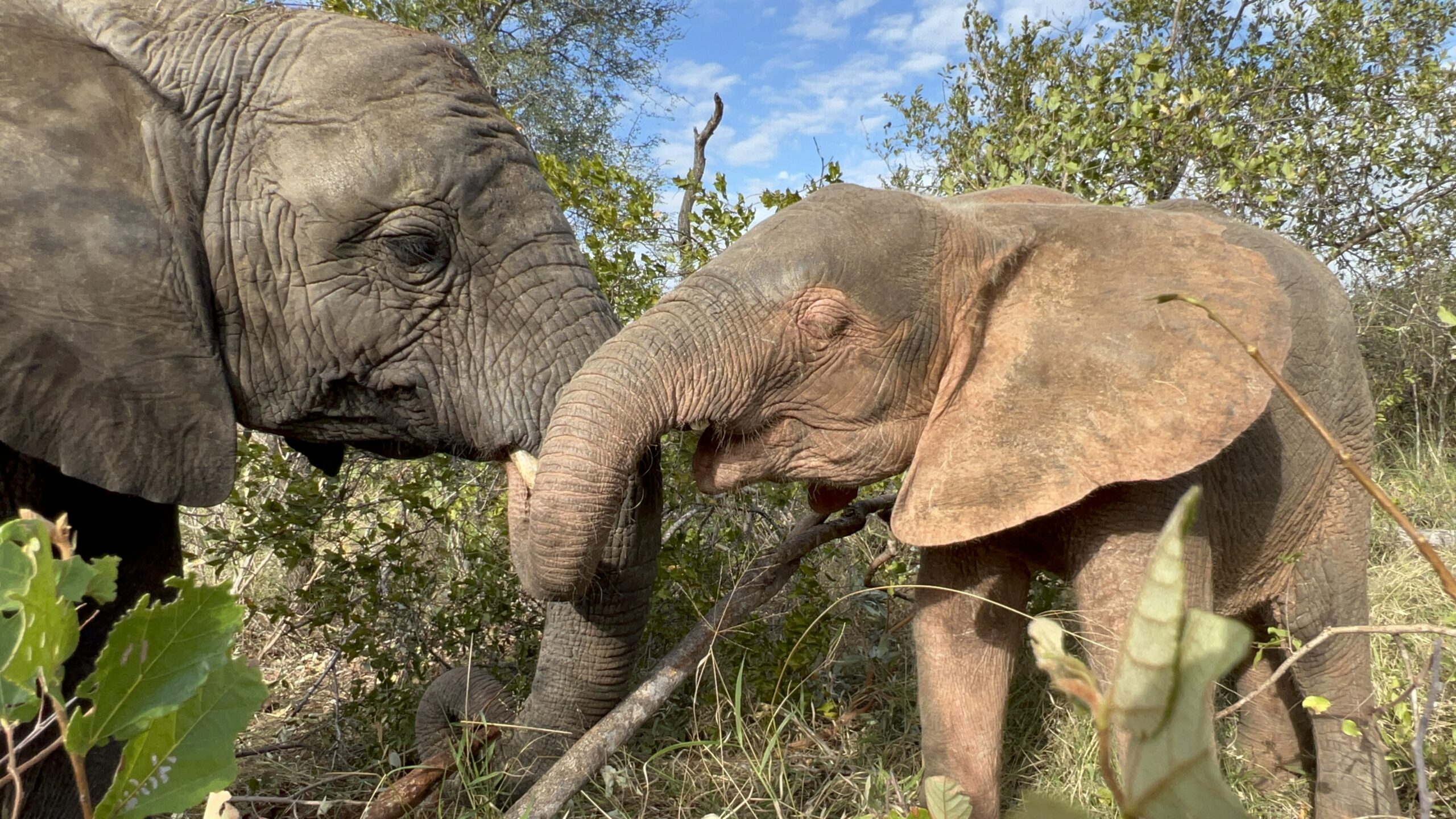
When two elephants are in conflict, one elephant may place their trunk in the mouth of the other as an act of conciliation. When a third elephant is trying to mediate an aggressive situation between two elephants, they may also place their trunk into the mouths of the other elephants.
Playing
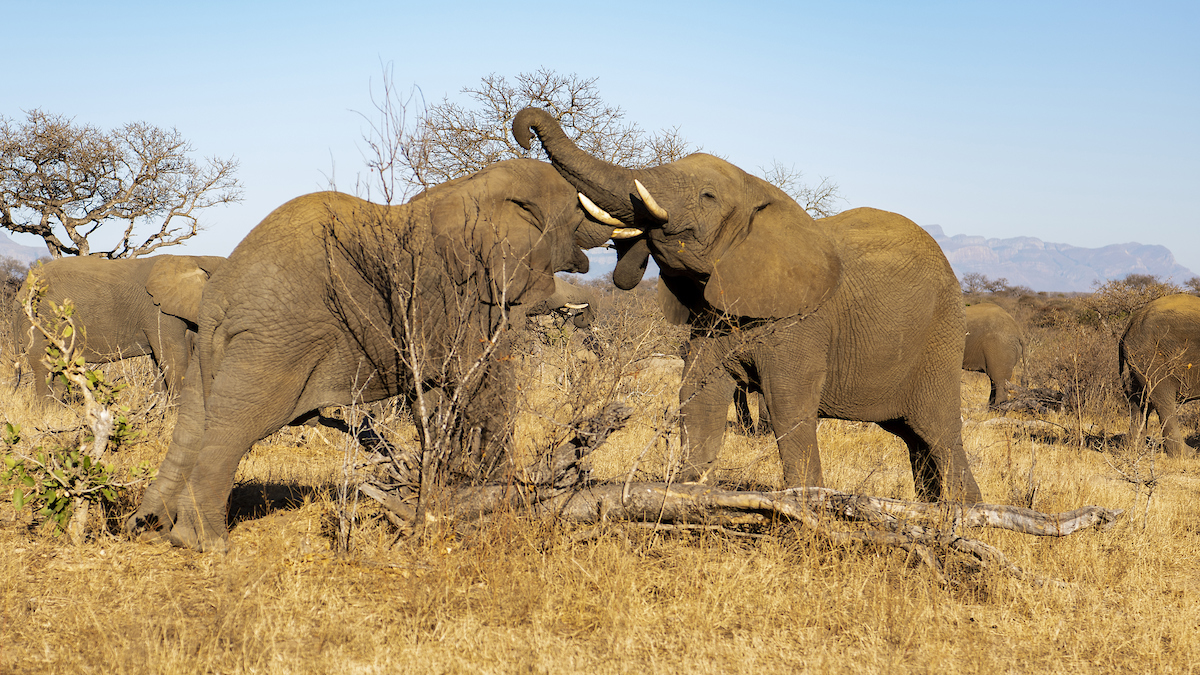
While playing with each other, elephants sometimes place their trunks in each other’s mouths or touch each other’s mouths. For example, when two elephants are playfully sparring, they may gently touch each other’s tusks or mouths.
Guiding
When attempting to get others to move or to do something specific, an elephant may place their trunk in another elephant’s mouth. In this way, an elephant uses their trunk to “guide” another elephant. For example, an elephant may guide a calf away from something, an elephant may guide other elephants in a certain direction, etc.